The level horizon
The sea presents itself to the eye as a line, not as a curving wall. In the flat-earth reading, that is not a minor detail, but the simplest starting point.
The zetetic posture does not begin with a model that has already decided everything, but with experience itself: horizon, light, distance, perspective, and the stillness of a stationary world.
The sea presents itself to the eye as a line, not as a curving wall. In the flat-earth reading, that is not a minor detail, but the simplest starting point.
Ships, coastlines, and lights do not have to sink only beneath curvature. Perspective, atmospheric layers, and optical limitation offer another frame.
Sunrise and sunset are read here as the motion of light above the plane, not as the rotation of an entire world beneath our feet.

This horizon photograph carries the whole site: level, still, and persuasive in its simplicity. Not every insight begins with complicated instruments; some begin with learning to look again.
CC0 via an older Unsplash publication on Wikimedia Commons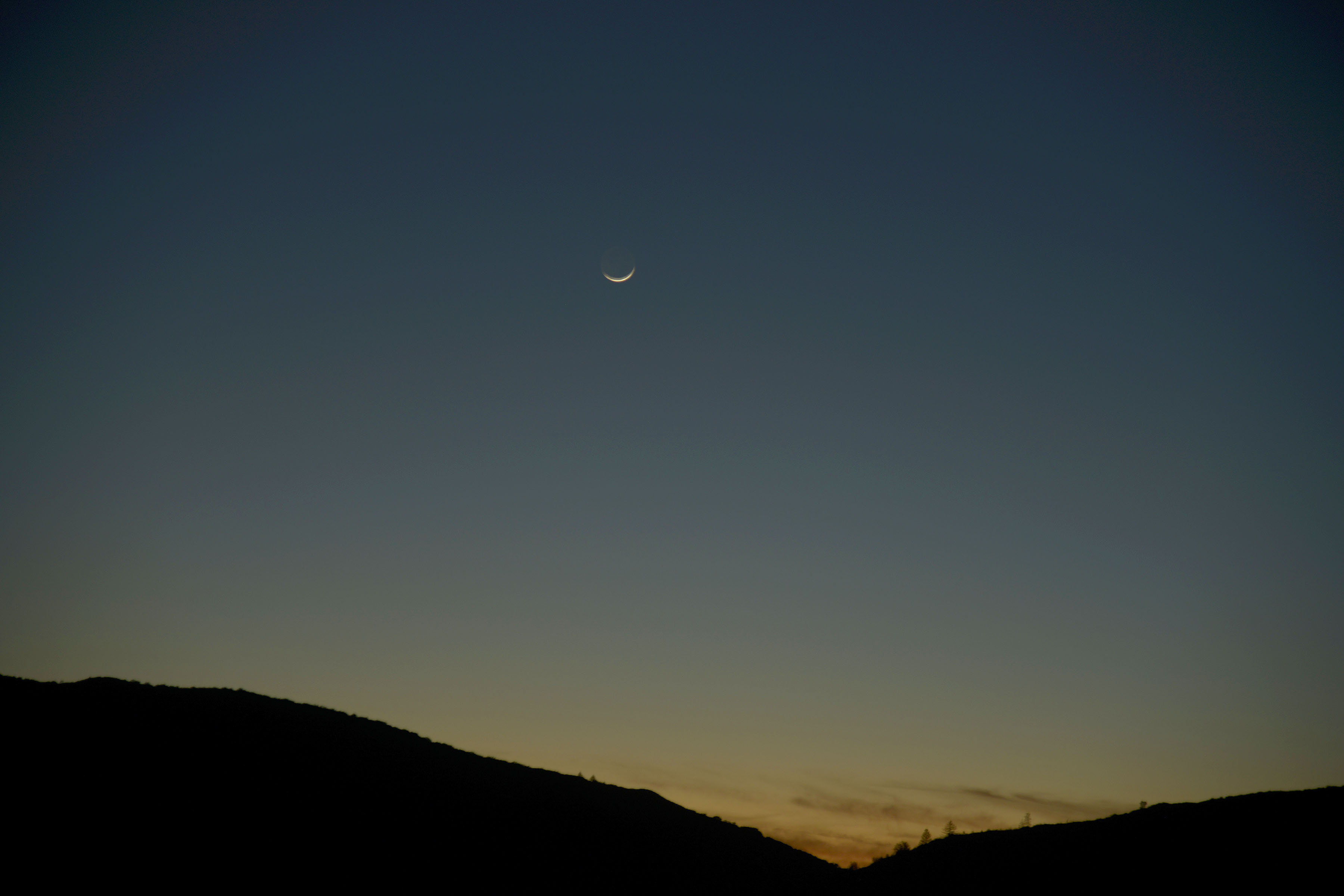
The stars are seen not only as distant objects, but as part of a coherent, arching field of heaven unfolding above the observer.
Public domain · U.S. Forest ServiceWhat do we actually see at the horizon, and what do models add only afterward?
How much of our worldview is observation, and how much is learned interpretation?
If light behaves optically differently than assumed, which conclusions need to be revisited?
Why does the earth feel stationary while the standard model demands unimaginable speeds?
| Theme | Flat-earth reading | Role in the site |
|---|---|---|
| Horizon | Level and stable | Forms the intuitive entrance into the subject. |
| Disappearance of objects | Perspective and optical limitation | Makes room for an alternative explanation of distance. |
| Sunset | Motion of light, perspective, path | Connects visual experience to model thinking. |
| Heavenly arch | Enclosing structure | Links naturally to firmament and star field. |